




Miner's Strike
|
• Animation indicating the decline of the coal industry in the UK. [1] Sources: Northern Mine Research Society, Government data |
• Pit-head baths, Bolsover Colliery - click to read more. |


- "...the building of a new Colonial Office becomes a non-problem, while the days of pit-head baths are numbered."
- (Cedric Price, 'Life-conditioning', Architectural Design, October 1966)
[edit] INTRODUCTION
When I first started my slot as Designing Buildings' Guest Editor I searched the site using the term 'Miners' strike'.
The results of my search on the site stated:—
- "This page does not exist. Click here to create the page "Miners' strike"
I therefore created the page "Miners' strike" on 23 March 2024. It was based on an assumption, namely:—
- ... that the term "Miners' strike" refers to the strike action taken by some miners in the United Kingdom from March 1984 to March 1985.
My next step was to search the web using the same term.
Below are my reasons for having chosen particular news articles about the Miners' strike.
[edit] Why have I chosen the particular news articles from the web?
I have chosen the following Wikipedia articles because there are no articles about the Miners' strike on Designing Buildings - The Construction Wiki.
- Wikipedia Contributors (2024) '1984–1985 United Kingdom miners' strike', Wikipedia;
- Wikipedia Contributors (2024) 'Coal mining in the United Kingdom', Wikipedia;
I have also chosen two other articles from the web:—
- Harris, J. (2023) 'Almost 40 years on, the miners’ strike still casts a long shadow over UK politics today', 27 August,The Guardian;
- Bartholemew, J. and Skopeliti, C. (2024) '‘People have lost faith’: life in former mining towns 40 years on from strike', 7 March, The Guardian.
[edit] • Wikipedia Contributors (2024) '1984–1985 United Kingdom miners' strike'The main article draws my attention because it tops the list of search results and its source is Wikipedia. It states:—
• Images from the Wikipedia article [edit] • Wikipedia Contributors (2024) 'Coal mining in the United Kingdom'The second article draws my attention because it supplements the main article. It states:—
It also provides a link to a list of coal mines in the United Kingdom, sorted between those operating in the 21st century and those closed earlier, namely:—
• Images used to illustrate the Wikipedia articles |


• Table 1: Two articles from Wikipedia.
[edit] Harris, J. (2023) 'Almost 40 years on, the miners’ strike still casts a long shadow over UK politics today'This article draws my attention because it discusses some of the long-term effects of the miners' strike and possible ways forward.
• Images related to John Harris' article John Harris concluded:—
[edit] Bartholemew, J. and Skopeliti, C. (2024) '‘People have lost faith’: life in former mining towns 40 years on from strike'This article draws my attention because it discusses some of the long-term effects of the miners' strike and possible ways forward.
• Images from the Bartholemew and Skopeliti article
•Screenshots of the ONS website |


• Table 2: Two news articles from the web with links to reports
[edit] CONCLUSION
In 1966 Cedric Price wrote:
Thus Cedric Price anticipated the slow death of the coal industry. Furthermore, he proposed in its place:
- "A plan for an advanced educational industry in North Staffordshire'
- Potteries Thinkbelt, AD 10/66
This article concludes:—
- ... that successive governments have been closing coal mines in the UK for decades;
- ... that a possible way forward has yet to be constructed.
[edit] Notes
[1] Macalister, T. et al (2015) 'The demise of UK deep coal mining: decades of decline', The Guardian 18 December.
[2] The Durham Mining Museum and its contributors (2024) 'UK Collieries (A work in progress!!!)', dmm.org.uk
[edit] References
Cedric Price, 'Life-conditiong', Architectural Design, October 1966.
Northern Mine Research Society
[edit] Further reading
Adams, T. (2024) '‘They didn’t understand us at all’: why the miners’ strike still captivates Britain, 40 years on', 25 February, The Observer.
The Economist (1978) 'Report of Nationalised Industries Policy Group (leaked Ridley report)', 27 May.
[edit] Related articles on Designing Buildings
Featured articles
Check out some of the best features and news from Designing Buildings as well as key stories from around the web.

National Scheme of Delegation introduced.

The cost of employing people remains a concern.
Code of Practice for Electrical Energy Storage Systems.

ECA calls on members to comment on draft 4th edition.

Bringing together expertise and creating cultural benefits.

CIOB celebrates positive Ofsted report.

The Building Safety Regulator announces a call for evidence.

Government approach could undermine delivery and regeneration.
World's first mass timber data centre.
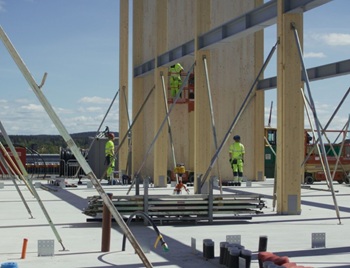
The overlooked environmental aspect of data centre development.
Introduction to radon awareness

New technical information sheet published by CIOB.

Updated supplier guide can help electrical contractors engage with NHP.

CIAT confirm the winners of the 2026 architectural technology awards.

Government launches a one stop shop for flood preparedness.